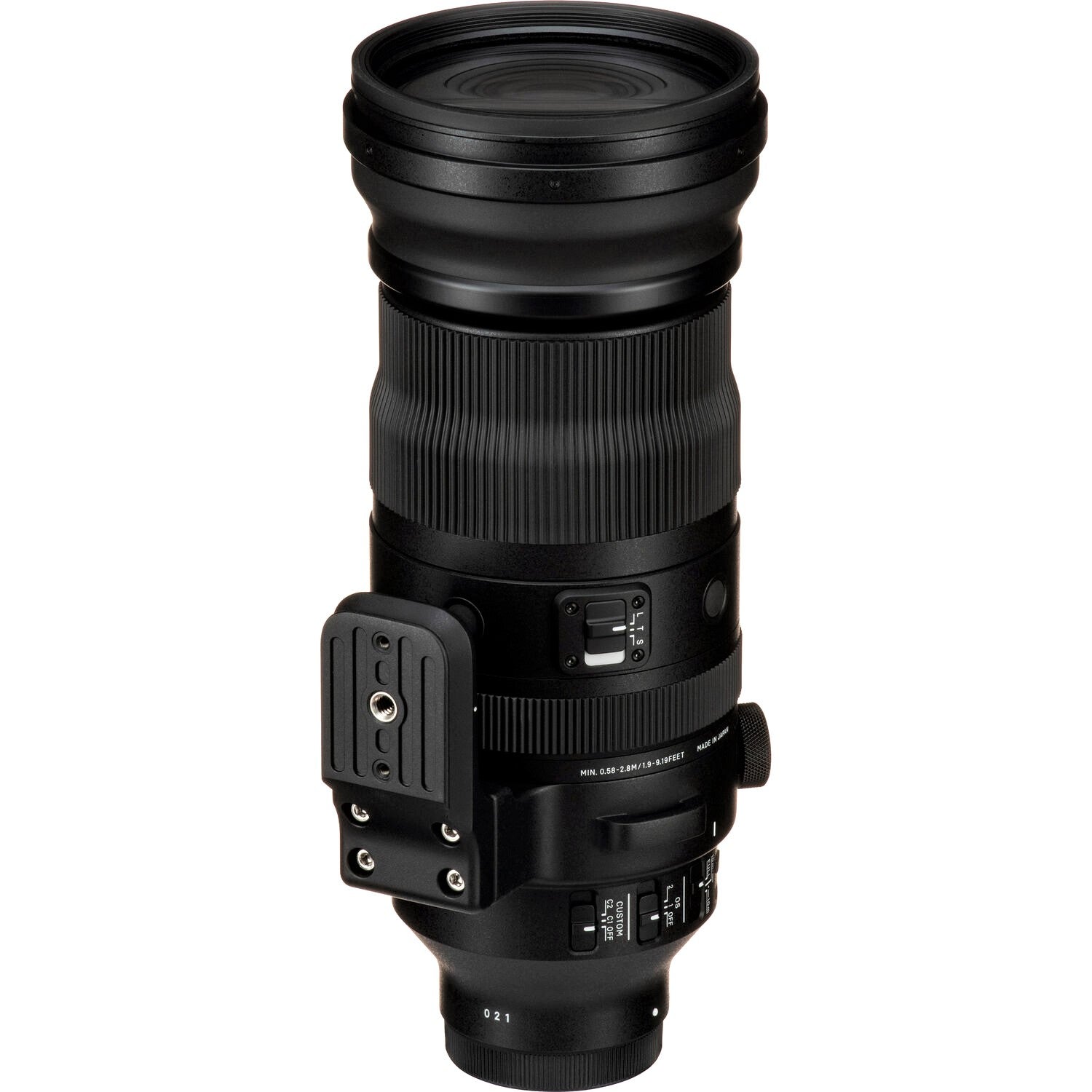
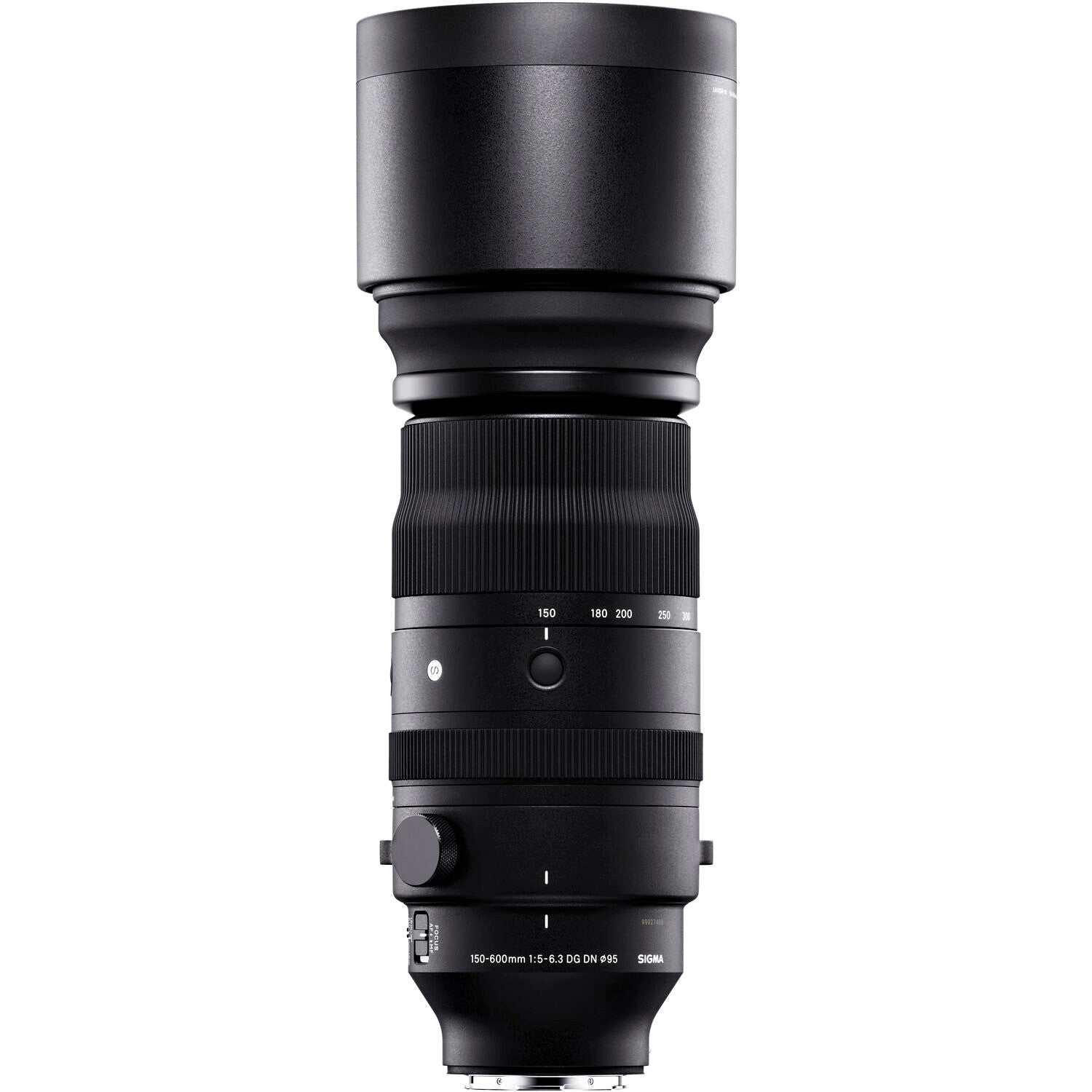
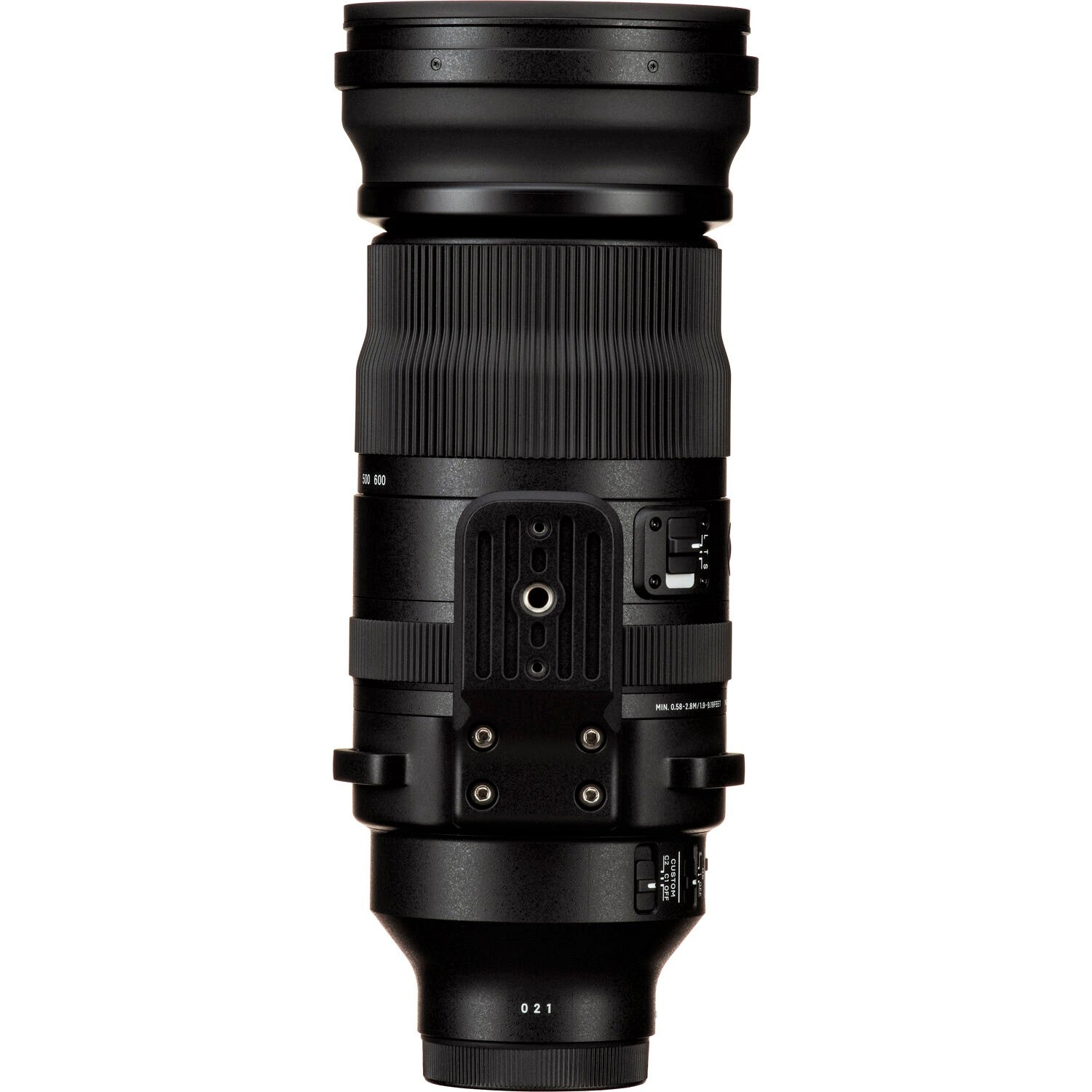
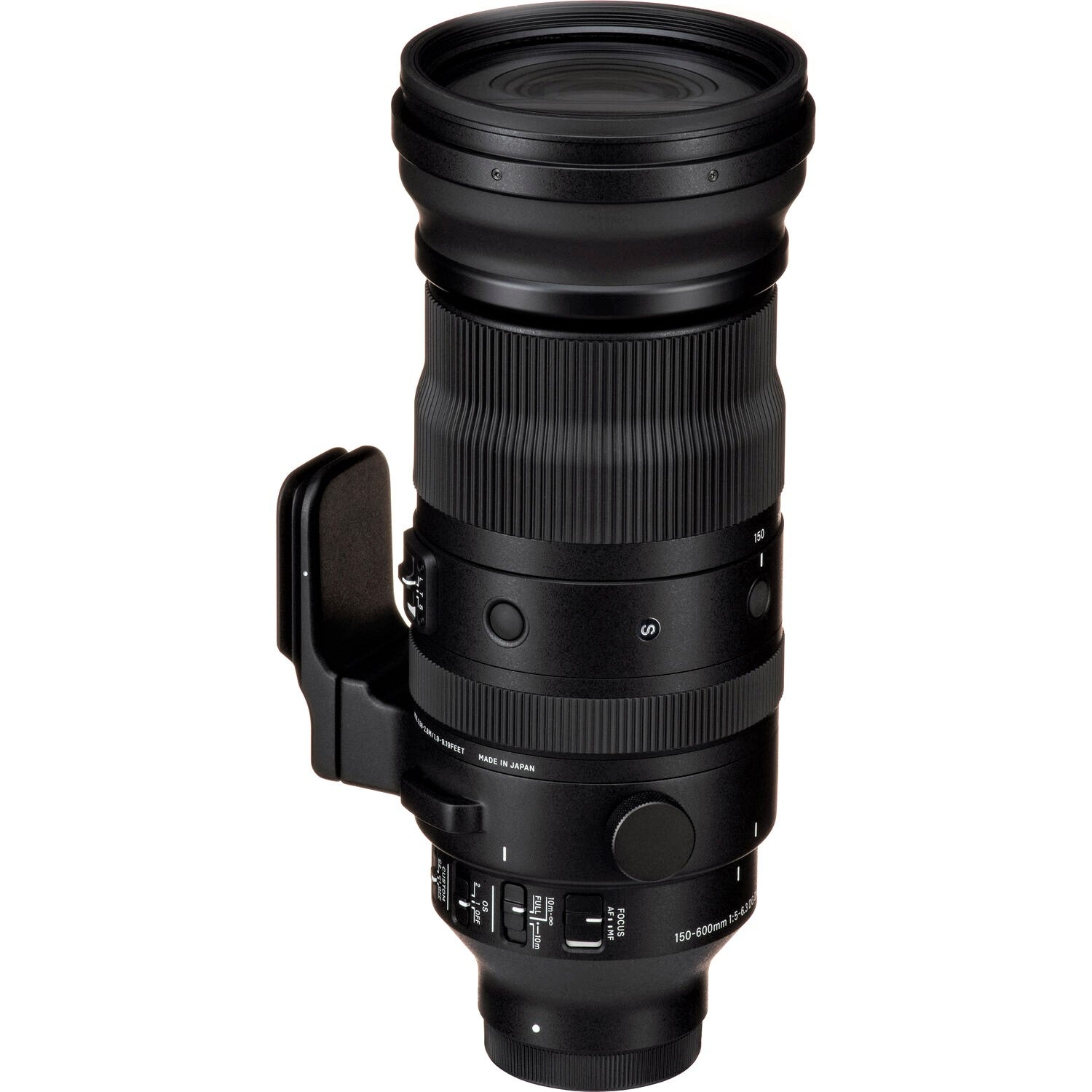
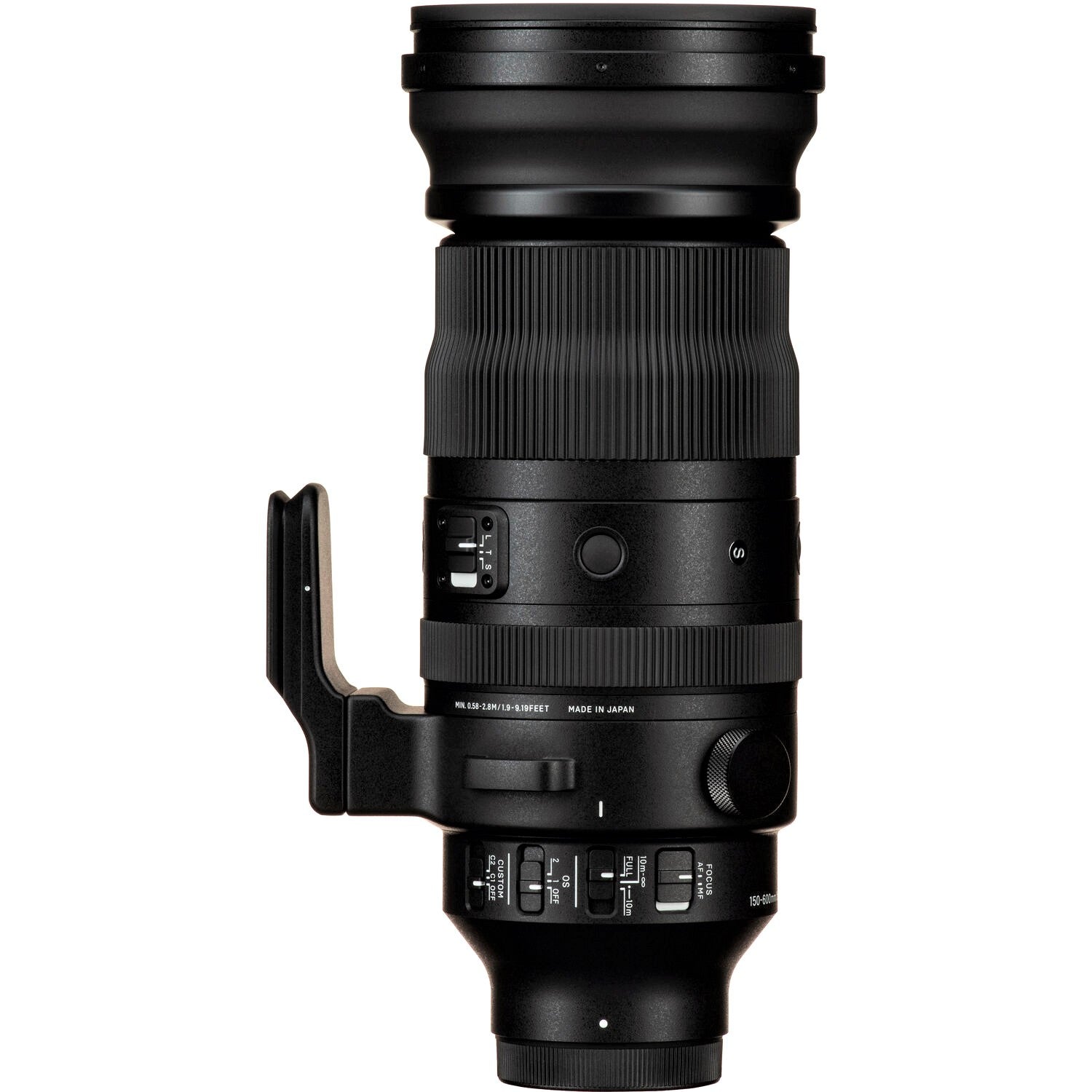
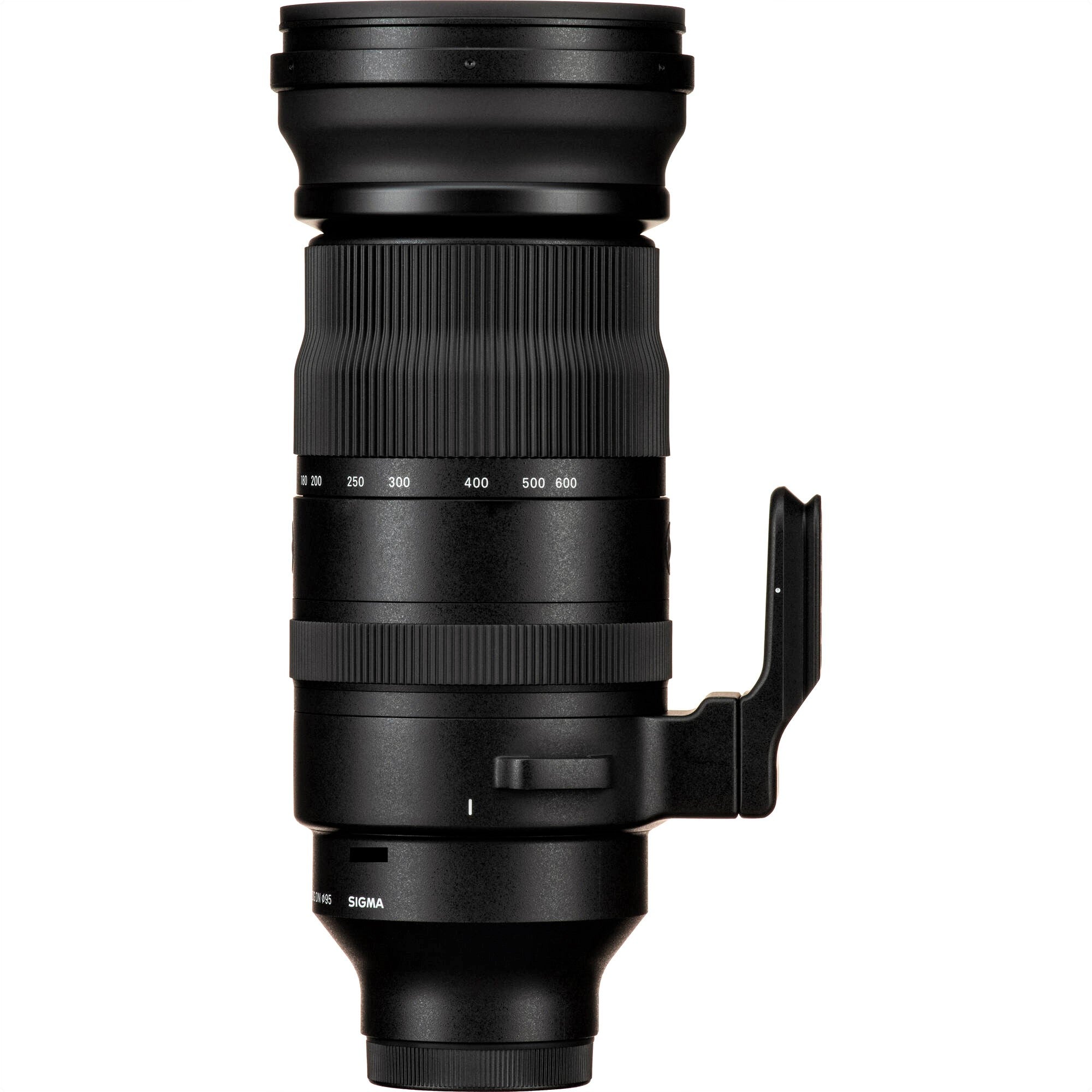
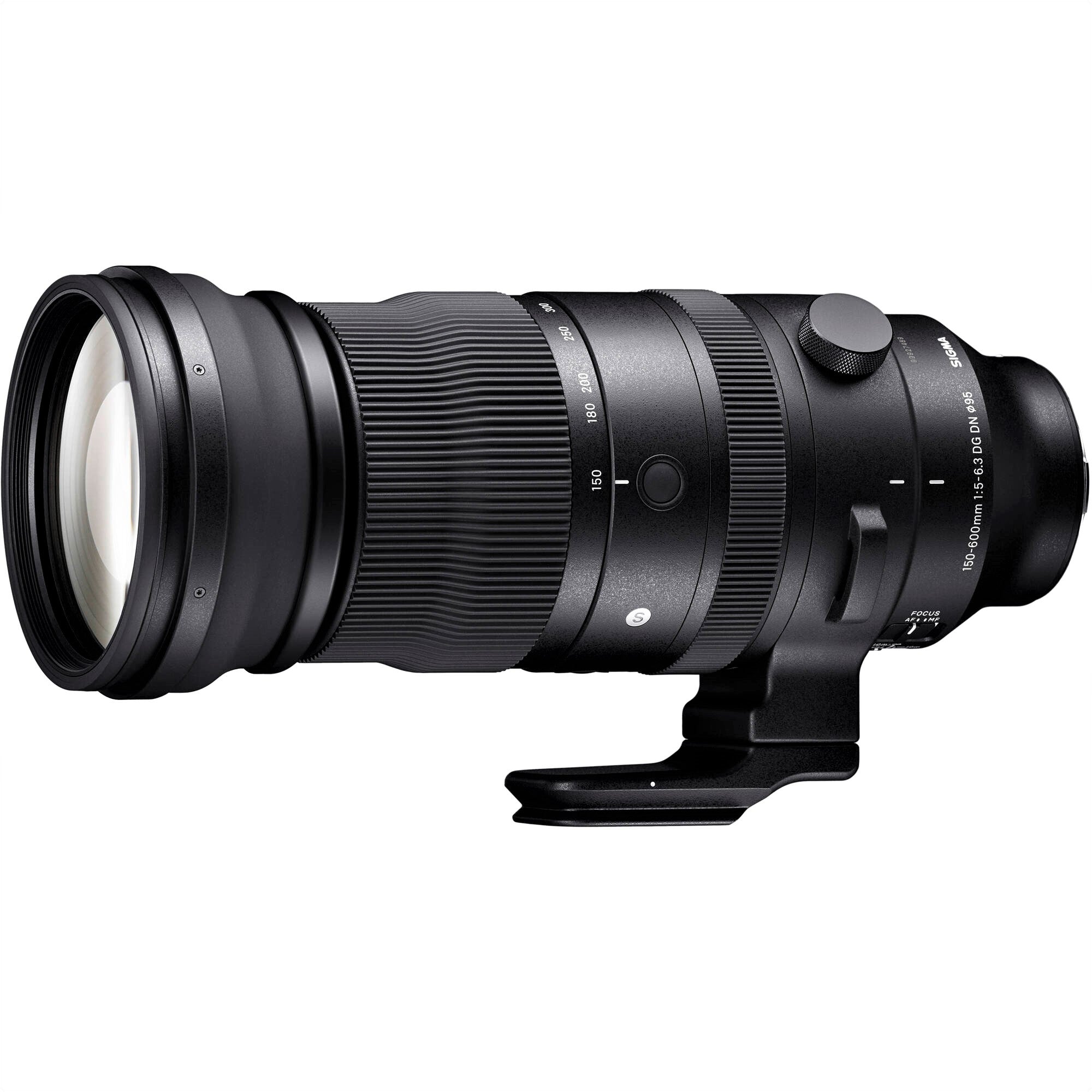
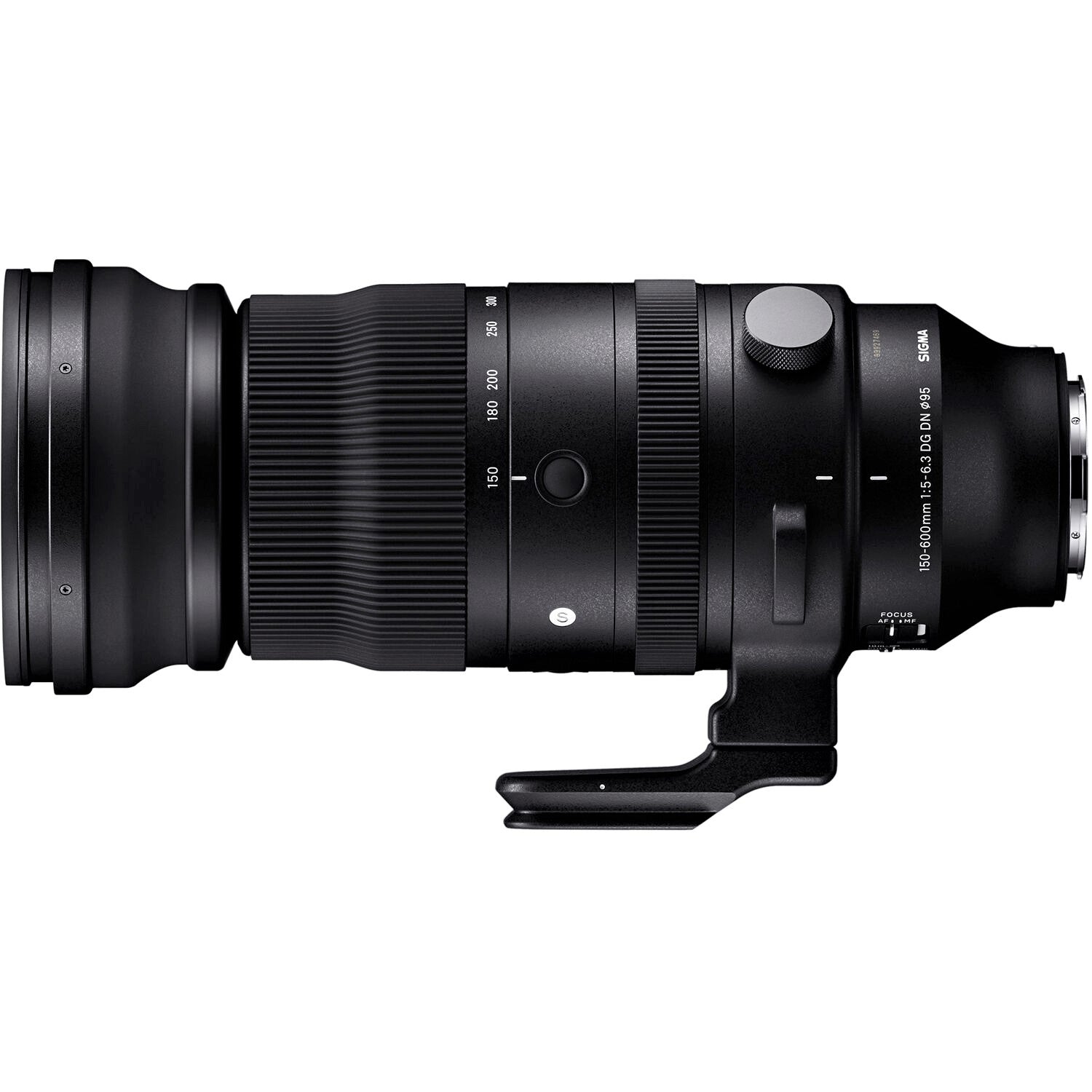

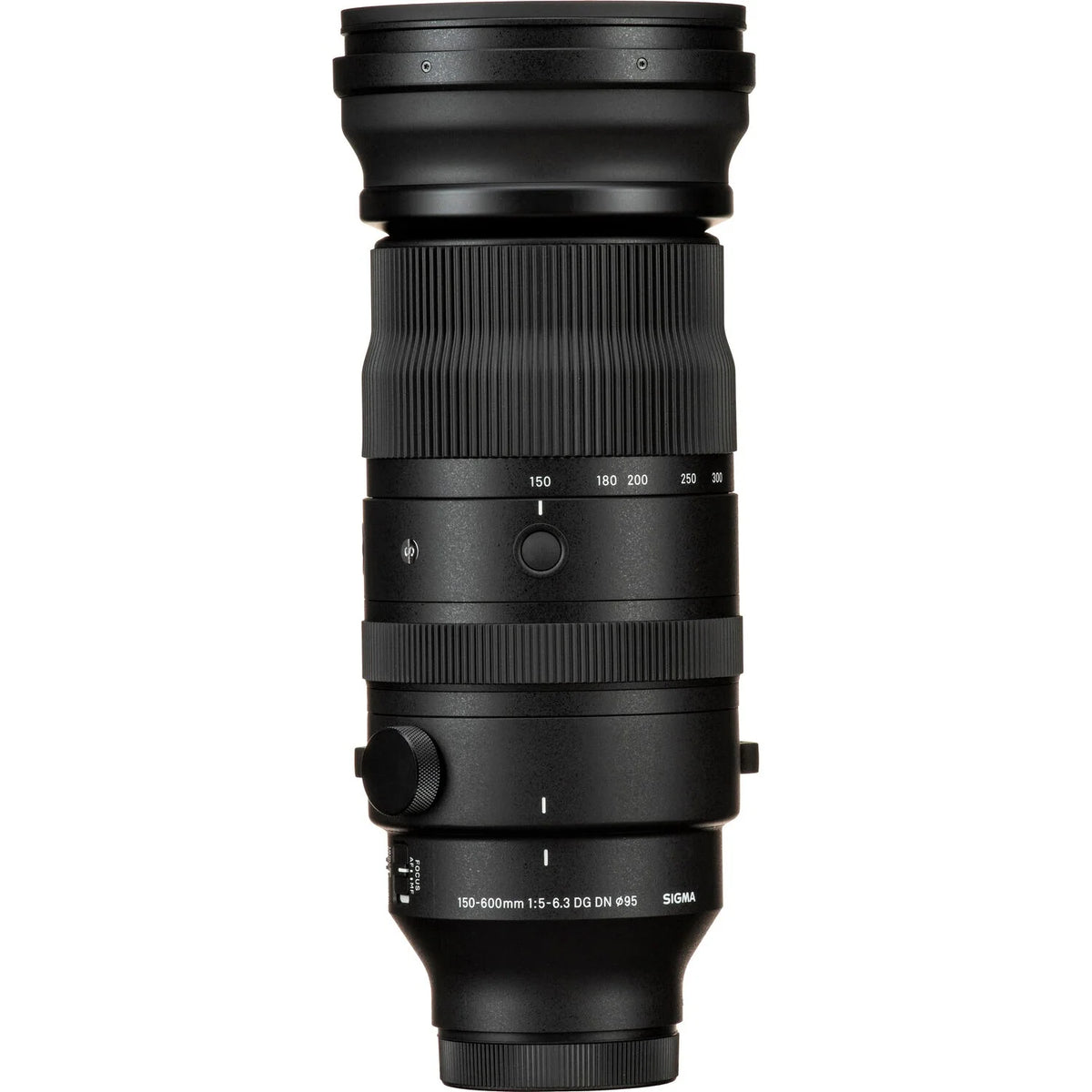
Key Features
- 150–600mm Ultra-Telephoto Zoom
- Full-Frame Sony E-Mount and L-Mount Compatibility
- Variable f/5–6.3 Maximum Aperture
- Optical Image Stabilization up to 6.5 Stops with Updated Firmware
- Fast and Quiet Stepping Motor Autofocus
- Dual Action Zoom with Adjustable Zoom Torque
- Dust- and Splash-Resistant Construction
- 1:2.9 Maximum Magnification
- 2,100g Weight with Arca-Swiss-Compatible Tripod Foot
Sigma
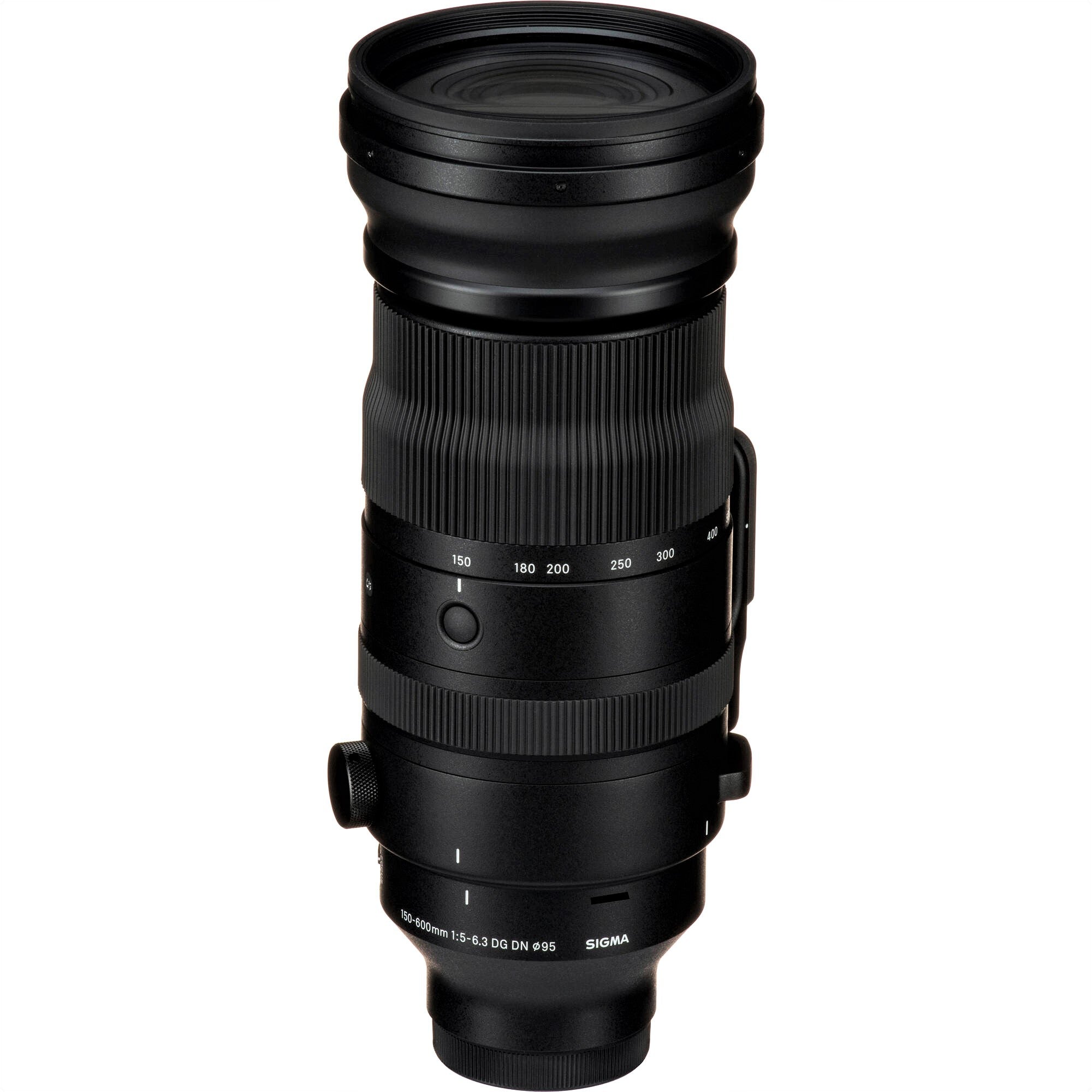
Sigma 150-600mm F5-6.3 DG DN OS Sports Lens
Sigma 150-600mm F5-6.3 DG DN OS Sports Lens
Sony E
9420 E DoubleTree Ranch Rd #107
9420 E DoubleTree Ranch Rd #107
Scottsdale AZ 85258
United States
Key Features
- 150–600mm Ultra-Telephoto Zoom
- Full-Frame Sony E-Mount and L-Mount Compatibility
- Variable f/5–6.3 Maximum Aperture
- Optical Image Stabilization up to 6.5 Stops with Updated Firmware
- Fast and Quiet Stepping Motor Autofocus
- Dual Action Zoom with Adjustable Zoom Torque
- Dust- and Splash-Resistant Construction
- 1:2.9 Maximum Magnification
- 2,100g Weight with Arca-Swiss-Compatible Tripod Foot
Hurry and Save
- FREE Shipping for orders $150 above
- Expedited shipping available

Got A Question? - Ask Our Team
03 · The lens
Why does changing lenses change the picture?
Stand in one spot and turn the zoom ring: at 150 mm the frame holds the whole room; at 600 mm it's one face. That's 4× the reach without taking a step — and the background comes closer with it.
The same lesson hangs on the studio wall in Scottsdale — come try it with the camera in your hands.
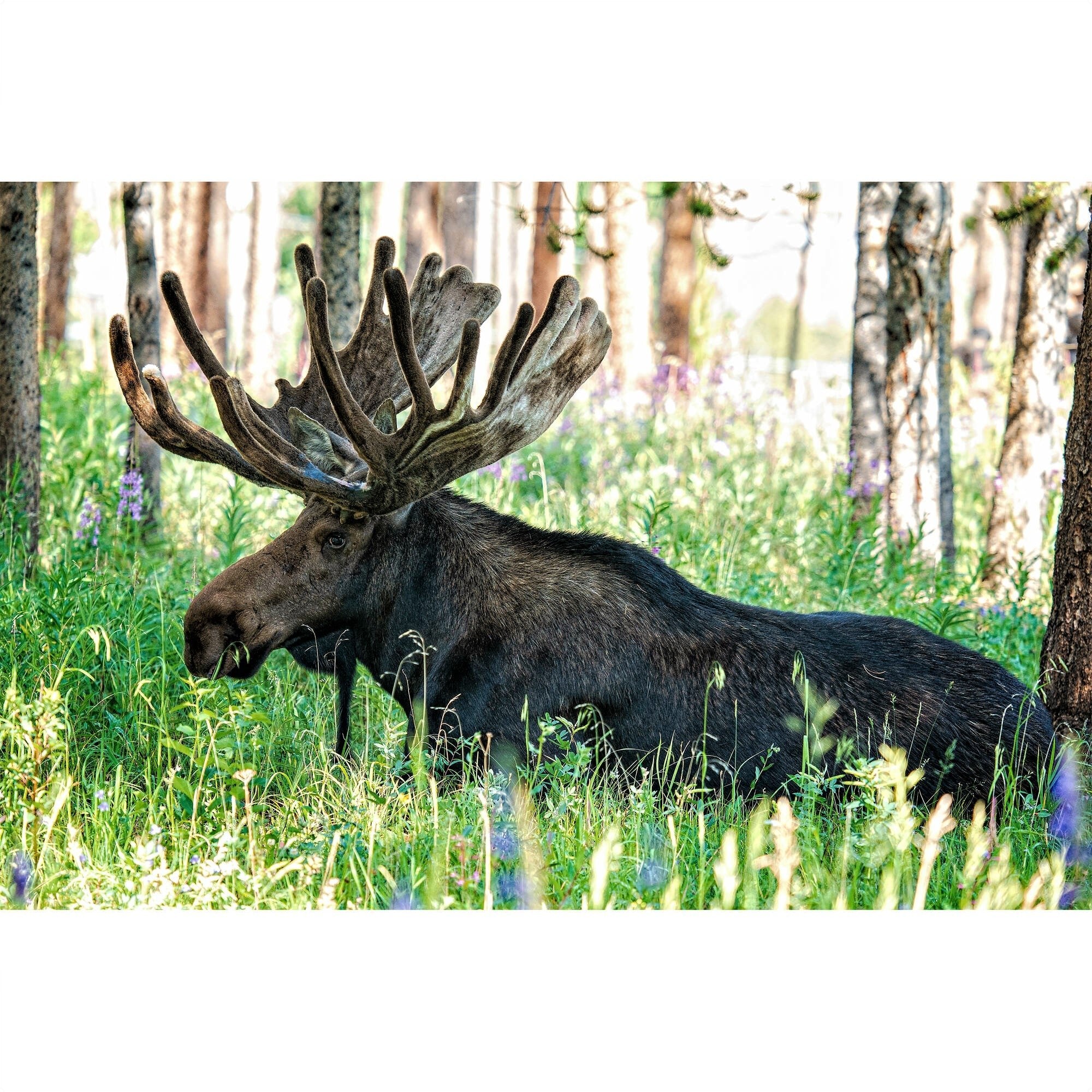
Same spot, same subject — the long end shows the middle of the wide end's picture.
Sigma 150-600mm F5-6.3 DG DN OS Sports Lens – Long-Range Zoom with Optical Stabilization
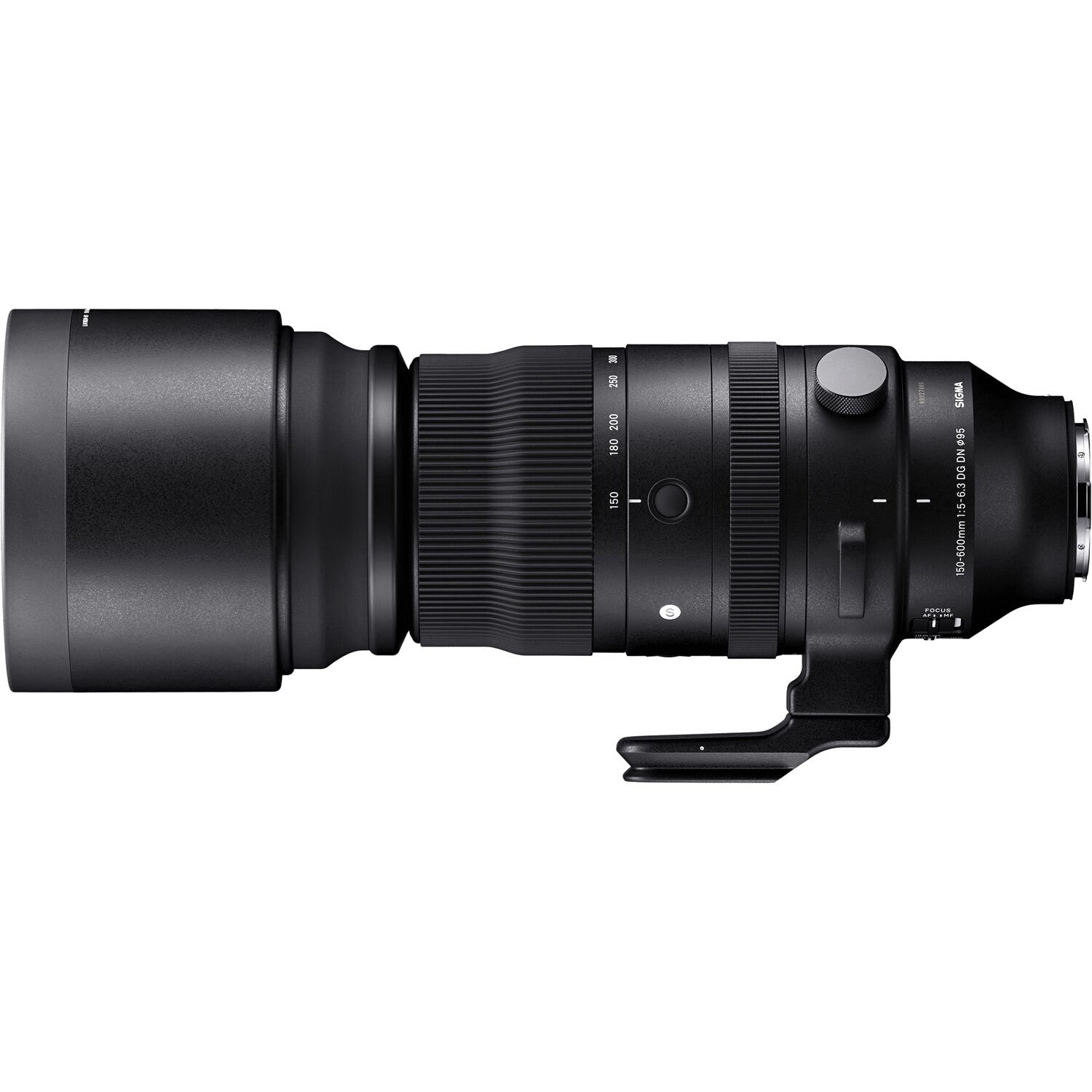
The Sigma 150-600mm F5-6.3 DG DN OS Sports Lens is a full-frame ultra-telephoto zoom lens designed for Sony E-Mount and L-Mount mirrorless cameras. With a versatile 150–600mm focal range, it gives wildlife, bird, sports, and aviation photographers the reach needed to capture distant subjects without constantly changing lenses. The 150mm end provides flexibility for wider compositions, while 600mm brings faraway subjects closer, making it particularly useful when approaching the action isn't practical.
Built specifically for mirrorless systems, the lens features 25 elements in 15 groups, including four FLD and two SLD elements that help control chromatic aberration and maintain image clarity throughout the zoom range. Its stepping motor delivers responsive, quiet autofocus, while built-in optical stabilization helps reduce camera shake when shooting handheld. Updated firmware provides up to 6.5 stops of stabilization at 150mm and 5.5 stops at 600mm. The Dual Action Zoom allows photographers to adjust framing using either the zoom ring or a push-pull motion, with adjustable torque for greater control. A minimum focusing distance of 58cm at 150mm and maximum magnification of 1:2.9 also make it useful for close-up nature photography.
At approximately 2.1kg, the Sigma 150-600mm Sports Lens is substantial, but its dust- and splash-resistant construction, customizable controls, and Arca-Swiss-compatible tripod foot make it practical for demanding outdoor sessions. Its variable f/5–6.3 aperture is better suited to well-lit conditions than low-light environments, and the extending zoom barrel requires additional handling space. For photographers who prioritize long-range versatility, reliable stabilization, and detailed telephoto images, it offers a capable alternative to carrying multiple fixed-focal-length lenses.
Product Benefits:
- Capture Distant Subjects with Confidence: Photograph wildlife, birds, and sporting events without needing to get physically closer to the action.
- Get Sharper Handheld Results: Reduce the effects of camera shake when shooting at longer focal lengths, especially without a tripod.
- React Quickly to Moving Subjects: Adjust framing and track unpredictable action more easily when photographing birds in flight or fast-paced sports.
- Maintain Image Detail Across the Zoom Range: Capture fine textures, feathers, and distant details with reduced color fringing.
- Spend Less Time Changing Lenses: Switch between wider telephoto compositions and tightly framed subjects using one versatile lens.
- Shoot Outdoors with Greater Peace of Mind: Dust- and splash-resistant construction helps protect the lens during challenging outdoor conditions.
- Enjoy More Flexible Shooting Positions: Move between handheld shooting and tripod-supported setups, with convenient adjustments for portrait and landscape compositions.
- Capture More Than Distant Subjects: Photograph smaller wildlife, flowers, and natural details up close without switching to a dedicated macro lens.
Features:
150–600mm Ultra-Telephoto Zoom for Wildlife, Sports, and Distant Subjects
The Sigma 150-600mm F5-6.3 DG DN OS Sports Lens offers a versatile 4× zoom range that allows photographers to capture subjects at varying distances without changing lenses. At 150mm, users can frame larger animals, sporting events, and environmental compositions. Extending to 600mm provides tighter framing for distant birds, wildlife, aircraft, and athletes. This flexibility is particularly useful when subjects move unpredictably or when getting physically closer isn't possible. Photographers can quickly adjust their compositions while maintaining a safe or practical shooting distance.
Full-Frame Mirrorless Design for Sony E-Mount and L-Mount Cameras
Designed specifically for mirrorless camera systems, this lens is available in Sony E-Mount and L-Mount versions. Its optical construction is optimized for full-frame sensors, allowing photographers to use the entire image area on compatible cameras. It also works with supported APS-C mirrorless bodies, providing a field of view equivalent to 225–900mm on cameras with a 1.5× crop factor. This additional framing reach can be useful for birding and wildlife photography, where subjects frequently occupy a small portion of the scene. The lens maintains its actual 150–600mm focal length and f/5–6.3 maximum aperture regardless of sensor format.
Advanced Optical Design with 25 Elements in 15 Groups
The lens uses 25 optical elements arranged in 15 groups to maintain image quality throughout its extensive focal range. This design helps control optical imperfections that can become more noticeable at longer focal lengths, particularly when photographing high-contrast subjects. Whether capturing detailed bird feathers, distant landscapes, or outdoor sporting events, the optical system is engineered to deliver consistent detail and contrast. Its construction balances telephoto performance with the practical requirements of a variable-aperture zoom lens.
Four FLD and Two SLD Elements for Reduced Chromatic Aberration
Four FLD (F Low Dispersion) and two SLD (Special Low Dispersion) glass elements help minimize chromatic aberration, which can appear as colored fringes along high-contrast edges. This is especially important when photographing dark birds against bright skies, reflective surfaces, or distant subjects in strong sunlight. By controlling how different wavelengths of light focus, these specialized elements help preserve fine details and more natural color reproduction. Photographers benefit from cleaner image edges and less need to correct color fringing during editing.
Optical Image Stabilization for Sharper Handheld Telephoto Photography
Built-in Optical Stabilization (OS) helps compensate for camera movement, which becomes increasingly noticeable when shooting at 600mm. With compatible updated firmware, Sigma rates the stabilization system at up to 6.5 stops at 150mm and 5.5 stops at 600mm. This allows photographers to work with slower shutter speeds than would otherwise be practical when photographing stationary subjects handheld. Stabilization is particularly helpful during wildlife observation, outdoor events, and situations where carrying or setting up a tripod is inconvenient. Actual results depend on shooting conditions, camera movement, and technique.
OS Mode 1 and Mode 2 for Stationary Subjects and Panning
The lens includes two selectable optical stabilization modes to accommodate different shooting situations. OS Mode 1 is intended for general handheld photography, helping reduce camera shake when photographing relatively stationary subjects. OS Mode 2 is designed for panning, where the camera follows a moving subject horizontally or vertically. This makes it useful for motorsports, running athletes, birds in flight, and other subjects that require continuous camera movement. Photographers can switch between stabilization modes directly on the lens without navigating camera menus.
Fast and Quiet Autofocus with a Stepping Motor
A stepping motor drives the autofocus system, providing responsive and relatively quiet focusing for both photography and video applications. The motor works with a high-precision magnetic sensor that detects the position of the focusing group, supporting accurate focus adjustments. This combination is useful when tracking moving wildlife, athletes, or aircraft, where maintaining focus is essential. Quiet operation also benefits photographers working in environments where unnecessary mechanical noise could be distracting. Autofocus performance ultimately depends on the connected camera's capabilities, subject movement, and available light.
Internal Focusing for More Consistent Lens Handling
The internal focusing mechanism adjusts focus without extending the lens barrel during focusing operations. This helps maintain more consistent handling as photographers switch between nearby and distant subjects. It also reduces the amount of external mechanical movement required during autofocus. For photographers working with monopods, tripods, or handheld telephoto setups, internal focusing makes focus adjustments less disruptive. The lens still extends when zooming from 150mm toward 600mm, since its zoom mechanism is not internal.
Dual Action Zoom for Faster Framing Adjustments
Sigma's Dual Action Zoom mechanism allows photographers to adjust focal length using either the traditional rotating zoom ring or a push-pull movement of the lens barrel. Rotating the ring provides controlled focal length adjustments, while push-pull operation allows rapid changes when subjects suddenly move closer or farther away. This flexibility is especially useful for wildlife and sports photography, where framing opportunities can change within seconds. Photographers can choose the zooming technique that feels most natural for the situation rather than relying on a single operating method.
Adjustable Zoom Torque with Lock, Tight, and Smooth Settings
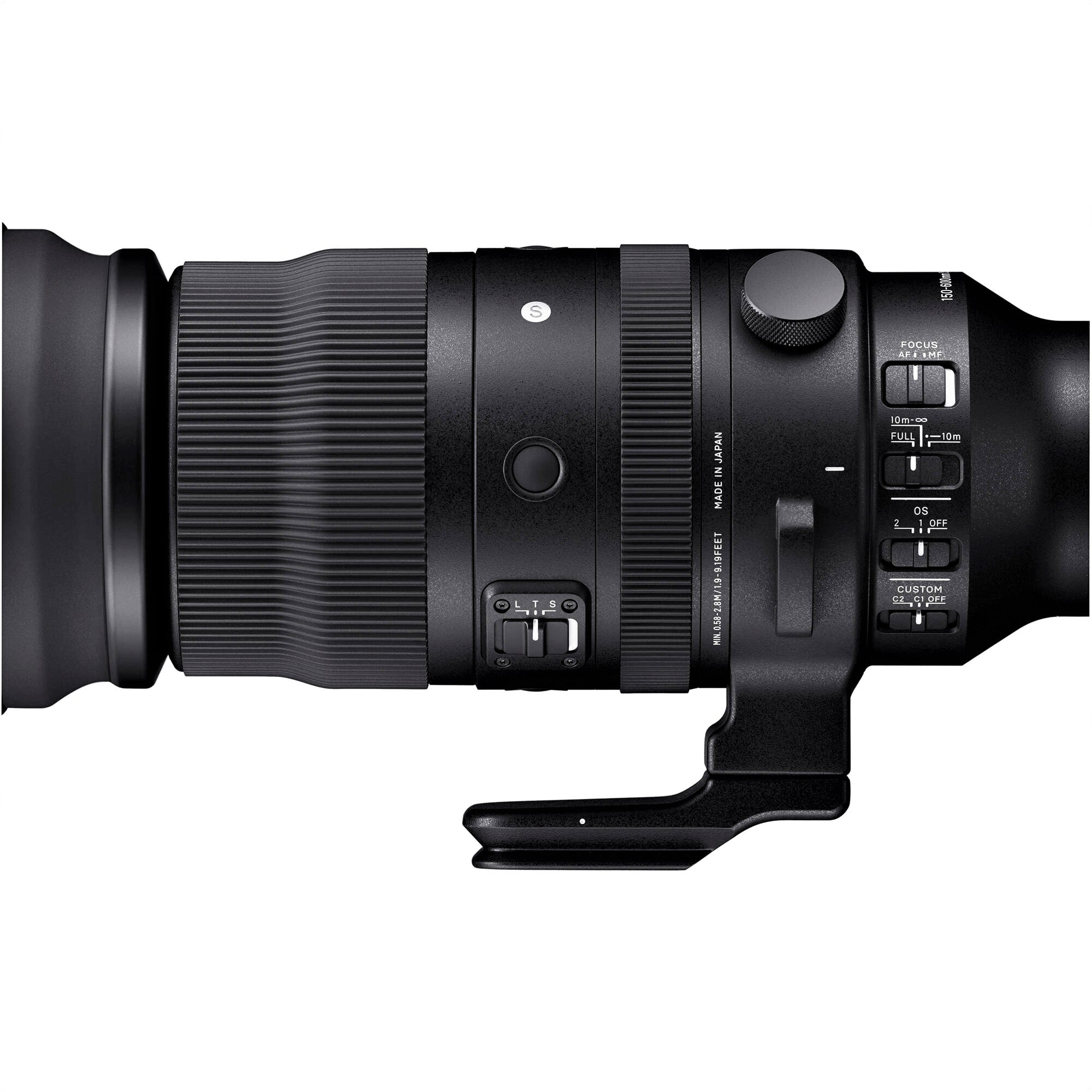
The Zoom Torque switch offers three settings that change how the zoom mechanism behaves. The Lock position secures the lens at 150mm, helping prevent unwanted extension during transport. Tight increases resistance, making it easier to maintain a selected focal length when the lens is tilted. Smooth allows easier movement for quick focal length adjustments. These options help photographers balance speed and control depending on their shooting environment. For example, Smooth can be useful when tracking moving subjects, while Tight may be preferable during carefully composed tripod photography.
Three-Zone Focus Limiter for More Efficient Autofocus
The built-in focus limiter allows photographers to restrict the distance range over which the autofocus system searches. The available settings include the full focusing range, approximately 10 meters to infinity, and the minimum focusing distance to 10 meters. Limiting the focus range can reduce unnecessary focus searching when the subject's approximate distance is known. For example, the distant setting is useful for birds or athletes far from the camera, while the closer setting can help when photographing nearby wildlife or natural details. This gives users more control over autofocus behavior in different shooting situations.
Three Customizable AFL Buttons for Convenient Focus Control
Three AFL buttons are positioned around the lens barrel, making them accessible when holding the camera in different orientations. These buttons can perform autofocus lock or other compatible camera-assigned functions, depending on the camera body. Their placement allows photographers to access important focusing controls without removing their supporting hand from the lens. This can be particularly convenient during prolonged wildlife sessions, sports photography, or tripod-mounted shooting. The available button assignments depend on camera compatibility.
Custom C1 and C2 Modes for Personalized Stabilization Behavior
The lens includes a Custom Mode switch with OFF, C1, and C2 positions. The custom modes allow photographers to select different stabilization viewing behaviors, with factory settings corresponding to Dynamic View Mode and Moderate View Mode. On the L-Mount version, compatible settings can be adjusted using Sigma Optimization Pro and the USB Dock UD-11. This gives photographers additional flexibility when choosing how stabilization behaves in the viewfinder. Users can configure the lens for different shooting preferences, such as handheld wildlife photography or controlled telephoto compositions.
58cm Minimum Focusing Distance for Close-Up Nature Photography
Despite its long telephoto range, the lens can focus as close as 58cm at the 150mm setting. Its maximum reproduction ratio of 1:2.9 occurs at approximately 180mm, allowing photographers to capture smaller subjects with considerable detail. This is useful for flowers, insects, reptiles, and natural textures that may be difficult to approach with shorter focal length lenses. The close-focusing capability expands the lens's usefulness beyond distant wildlife photography. Although it does not provide true 1:1 macro magnification, it offers practical close-up flexibility without requiring a separate lens for every subject.
Nine-Blade Rounded Diaphragm for Natural Background Separation
A nine-blade rounded diaphragm helps produce smoother out-of-focus highlights and more natural-looking background blur. When photographing wildlife or portraits of animals at longer focal lengths, the combination of telephoto perspective and a relatively wide aperture can help separate the subject from its surroundings. This is particularly effective when the background is positioned well behind the subject. Photographers can emphasize fine details while keeping distracting environmental elements less prominent. The appearance of background blur varies with focal length, aperture, subject distance, and background distance.
Variable f/5–6.3 Maximum Aperture for Practical Telephoto Coverage
The lens features a maximum aperture of f/5 at the shorter end of its zoom range and f/6.3 at 600mm. This variable-aperture design helps balance long focal length coverage, lens size, and weight. In daylight and other well-lit conditions, it provides practical exposure flexibility for wildlife, sports, and outdoor photography. However, the relatively modest maximum aperture can require higher ISO settings or slower shutter speeds in low-light environments. Photographers who frequently shoot indoor sports or wildlife around dusk should consider this limitation when evaluating the lens.
Dust- and Splash-Resistant Construction for Outdoor Photography
As part of Sigma's Sports series, the lens incorporates dust- and splash-resistant construction designed to help protect critical components during outdoor use. This is especially valuable for wildlife photographers working in dusty environments, nature photographers encountering changing weather, and sports photographers shooting outdoors. The front element also features a water- and oil-repellent coating that makes moisture, fingerprints, and other contaminants easier to remove. These protective features support more dependable field use, although the lens is not waterproof and should not be submerged or exposed to uncontrolled water ingress.
Aluminum and Thermally Stable Composite Construction
The lens combines aluminum components with Thermally Stable Composite (TSC), a material designed to maintain dimensional consistency as temperatures change. This construction supports mechanical stability while helping manage the weight of a large telephoto lens. The materials are particularly relevant for photographers who regularly move between different outdoor temperatures or use their equipment for extended periods. By balancing structural strength and weight, Sigma provides a durable lens body without relying entirely on heavier metal construction.
Magnesium Alloy Tripod Socket for Stable Telephoto Support
The included TS-121 tripod socket uses magnesium alloy construction to provide a strong support point while limiting unnecessary weight. Since large telephoto lenses can place considerable stress on a camera's lens mount when supported only by the camera body, a dedicated lens-mounted tripod socket helps distribute the load more appropriately. This is useful when photographing distant wildlife, tracking sports from a fixed position, or working with a monopod. The tripod support also helps improve handling during longer sessions where holding the full lens weight continuously would become tiring.
Arca-Swiss-Compatible Tripod Foot for Convenient Mounting
The removable tripod foot is compatible with Arca-Swiss-type mounting systems, allowing the lens to attach directly to many compatible tripod heads and quick-release clamps. This reduces the need for a separate quick-release plate when using suitable support equipment. Photographers can move between handheld operation, monopods, and tripod-mounted setups more efficiently. Compatibility should still be checked with the specific clamp or support system being used, since Arca-Swiss-style components are not universally identical.
Rotating Tripod Collar with 90-Degree Click Stops
The rotating tripod collar allows photographers to switch between horizontal and vertical camera orientations while keeping the lens mounted on a tripod or monopod. Click stops at 90-degree intervals help users align the camera consistently. This is especially helpful when changing composition for tall subjects, perched birds, portraits of wildlife, or vertically framed sports images. Rather than repositioning the entire tripod head, photographers can rotate the camera around the lens axis, making orientation changes faster and more controlled.
2.1kg Weight for a Mirrorless Ultra-Telephoto Sports Lens
At approximately 2,100g, the Sigma 150-600mm DG DN OS Sports provides extensive telephoto reach in a design developed specifically for mirrorless cameras. It is lighter than Sigma's older DSLR-oriented 150-600mm F5-6.3 DG OS HSM Sports lens, making it more manageable for photographers transitioning to mirrorless equipment. However, 2.1kg remains substantial for extended handheld use, especially when combined with a full-frame camera body. Photographers planning long wildlife walks or all-day sporting events may benefit from using a monopod or carrying system to reduce fatigue.
L-Mount Teleconverter Compatibility for Extended Telephoto Reach
The L-Mount version supports Sigma's TC-1411 1.4× and TC-2011 2× teleconverters. With the 1.4× teleconverter, the focal length extends to 210–840mm, while the 2× teleconverter provides 300–1200mm coverage. This additional reach can be useful when photographing particularly distant wildlife or subjects that cannot be approached. However, teleconverters reduce the maximum aperture, resulting in f/7–9 with the 1.4× model and f/10–13 with the 2× model. The resulting reduction in light gathering and potential image-quality trade-offs should be considered. These Sigma teleconverters are not compatible with the Sony E-Mount version.
95mm Filter Thread for Optical Accessories
The lens includes a 95mm front filter thread, allowing photographers to attach compatible protective filters, circular polarizers, and neutral density filters. Protective filters can provide an additional barrier against minor surface contact, while polarizers may help manage reflections in suitable shooting conditions. Neutral density filters can be useful when longer exposures are required in bright light. The large 95mm diameter reflects the size of the front optical assembly, so photographers should account for the cost and availability of compatible filters when planning their equipment setup.
Lens Hood for Reduced Stray Light and Front Element Protection
The supplied LH1034-01 lens hood helps limit unwanted light entering the lens from outside the image area, reducing the likelihood of flare in certain lighting conditions. It also provides some physical protection around the front element against accidental contact. This is useful during outdoor wildlife and sports photography, particularly when working in strong sunlight or changing shooting angles. Although the hood cannot eliminate all reflections or prevent damage from significant impacts, it is a practical accessory for everyday field use.
Sigma USB Dock UD-11 Support for L-Mount Customization
The L-Mount version is compatible with Sigma's USB Dock UD-11 and Sigma Optimization Pro software. This allows supported firmware updates and customization of selected lens functions, including focus limiter settings and stabilization behavior. Photographers can tailor certain controls to their shooting habits rather than relying exclusively on factory configurations. This can be valuable for users who regularly alternate between different types of photography. USB Dock customization is not available for the Sony E-Mount version, which uses its supported firmware-update procedure.
Firmware-Updated OS2 Stabilization for Improved Handheld Performance
Sigma introduced updated firmware that incorporates its newer OS2 stabilization algorithm into the 150-600mm DG DN OS Sports lens. With compatible firmware installed, the rated stabilization performance increases to 6.5 stops at 150mm and 5.5 stops at 600mm. This improvement is particularly relevant for photographers who already own the lens or are purchasing an earlier production unit. Checking the installed firmware helps ensure the lens can provide the updated stabilization capability. The benefit is most noticeable when camera shake, rather than subject movement, is the primary cause of blur.
Versatile Performance Across Wildlife, Birding, Sports, and Aviation Photography
The combination of long focal length coverage, optical stabilization, adjustable zoom resistance, autofocus controls, and outdoor-oriented construction makes this lens suitable for several demanding photography applications. Wildlife photographers can frame animals without approaching too closely, bird photographers can capture distant subjects, and sports photographers can follow action across a large field or track. Aviation photographers also benefit from the 600mm telephoto reach when photographing aircraft at a distance. Its close-focusing capabilities further extend its usefulness to flowers, insects, and other small natural subjects. This versatility makes it a practical option for photographers who need one telephoto zoom for multiple outdoor applications.
Best For
- Wildlife and Bird Photographers: Ideal for capturing distant animals, birds in flight, and unpredictable wildlife without approaching too closely.
- Outdoor Sports Photographers: Suited for photographing field sports, motorsports, and fast-moving athletes from the sidelines.
- Aviation Photographers: Provides the telephoto reach needed to photograph aircraft in flight or at distant airfields.
- Nature and Close-Up Photographers: Useful for capturing insects, flowers, and small wildlife with detailed close-up framing.
- Sony E-Mount and L-Mount Users: Designed for compatible full-frame and APS-C mirrorless cameras requiring extended telephoto coverage.
Not Ideal For
- Indoor Sports and Low-Light Photography: The variable f/5–6.3 aperture limits light gathering compared with faster telephoto lenses.
- Travelers Prioritizing Lightweight Equipment: Its approximately 2.1kg weight and large dimensions make it less convenient for compact camera setups.
- Wide-Angle and Everyday Photography: The 150mm minimum focal length is too narrow for general street photography, interiors, and expansive landscapes.
- Photographers Requiring Internal Zoom: The extending barrel changes the lens's physical length when zooming, which may be inconvenient for certain support setups.
- Canon RF and Nikon Z Camera Users: The lens is not available in native RF or Z mounts.
Pros
- Versatile 150–600mm Zoom Range: Excellent reach for wildlife, birding, sports, and aviation photography.
- Effective Optical Stabilization: Helps reduce camera shake when shooting handheld at long focal lengths.
- Sharp Optical Performance: FLD and SLD glass elements help minimize chromatic aberration and preserve fine details.
- Fast and Quiet Autofocus: Stepping motor supports responsive focusing on moving subjects.
- Dual Action Zoom: Rotary and push-pull zoom options allow quick framing adjustments.
- Weather-Resistant Construction: Dust- and splash-resistant design supports outdoor photography.
- Close-Up Capability: 1:2.9 maximum magnification provides flexibility for photographing smaller subjects.
- Tripod-Friendly Design: Arca-Swiss-compatible foot and rotating collar simplify tripod and monopod use.
Cons
- Heavy for Extended Handheld Use: Weighs approximately 2.1kg, which can cause fatigue during longer sessions.
- Limited Low-Light Performance: Variable f/5–6.3 aperture requires higher ISO settings in dim conditions.
- Large Physical Size: Less convenient for travel or compact camera setups.
- Extending Zoom Barrel: Changes the lens's length when zooming, unlike internal-zoom alternatives.
- Limited Teleconverter Compatibility: Sigma teleconverters are supported only on the L-Mount version.
- Large 95mm Filter Thread: Compatible filters can be more expensive than smaller options.
FEATURES:
- Uncompromising optical performance throughout the zoom range - Based on the latest optical design technology, its lens construction of 25 elements in 15 groups includes a range of special types of high-performance glass that ensures thorough control of different types of aberrations. This helps give images the resolution and clearest detail—not only at the tele end around 600mm, which is critical for an ultra-telephoto zoom but also throughout its entire zoom range—with no compromise.
- Super Multi-Layer Coating - SIGMA’s own Super Multi-Layer Coating suppresses flare and ghosting by preventing reflections within the lens. All lenses in the current SIGMA range feature this original technology.
- Fast, high-precision AF and impressive functionality - With an AF actuator controlled by a stepping motor, the lens combines fast and quiet autofocus with excellent tracking of moving objects. Furthermore, a high-precision magnetic sensor enables highly accurate positioning for fast and high-precision AF.
- Outstanding build quality optimized for ultra-telephoto photography - The lens combines the build quality that upholds the SIGMA Sports line standards with excellent operability, taking into account different shooting environments and modes of operation expected with an ultra-telephoto lens.
- OS (Optical Stabilizer) function - SIGMA’s original OS (Optical Stabilizer) function uses sensors inside the lens to detect any motion, then moves specific lens elements in order to effectively minimize blur caused by such movement.
- Inner focus system - To increase stability, this lens configuration uses movable internal lens elements that adjust focus without changing the length of the lens barrel.
- Compatible with Lens Aberration Correction - Matching the optical characteristics of the lens, this function performs in-camera corrections of peripheral illumination, chromatic aberrations, distortion, and more, to further enhance image quality.
- Water and oil-repellent coating - Incorporates water and oil-repellent coating that allows water to be wiped away easily and prevents oil and fat from sticking to the surface, even in challenging shooting conditions. At the same time, the maintenance of the lens surface becomes easier.
- Focus Mode Switch - Using this switch, it is possible to switch the focus mode between AF and MF.
- AFL button - The AFL button can be assigned various functions that widen the range of operations available on the lens.
- Dust and Splash Resistant Structure - This lens features highly effective dust and splash-resistant structure with special sealing at the mount connection, manual focus ring, zoom ring, and cover connection.
- Compatible with SIGMA TRIPOD SOCKET TS-81 (Replaceable lens foot type / sold separately)
- Designed to minimize flare and ghosting
- Every single lens undergoes SIGMA’s proprietary MTF measuring system
- 9-blade rounded diaphragm
- High-precision, durable brass bayonet mount
General Specifications
- Brand: Sigma
- Product Name: Sigma 150-600mm F5-6.3 DG DN OS | Sports Lens
- Product Code: S021
- Series: Sports
- Lens Type: Ultra-Telephoto Zoom Lens
- Camera System: Mirrorless Interchangeable-Lens Cameras
- Format: Full-Frame (35mm)
- Sensor Compatibility: Full-Frame and APS-C
- Available Mounts: Sony E-Mount and L-Mount
- Focal Length: 150–600mm
- Zoom Ratio: 4×
- Maximum Aperture: f/5–6.3
- Minimum Aperture: f/22–29
- Image Stabilization: Built-in Optical Stabilizer (OS)
- Autofocus: Yes
- Manual Focus: Yes
- Focus Design: Internal Focusing
- Zoom Design: External Extending Zoom
- Release Year: 2021
- Country of Manufacture: Japan
Optical Specifications
- Optical Construction: 25 Elements in 15 Groups
- FLD Elements: 4
- SLD Elements: 2
- Diaphragm Blades: 9
- Diaphragm Shape: Rounded
- Maximum Aperture at 150mm: f/5
- Maximum Aperture at 600mm: f/6.3
- Minimum Aperture at 150mm: f/22
- Minimum Aperture at 600mm: f/29
- Angle of View: 16.4°–4.1°
- Minimum Focusing Distance at 150mm: 58cm / 22.8 inches
- Minimum Focusing Distance at 600mm: 280cm / 110.2 inches
- Maximum Magnification Ratio: 1:2.9
- Maximum Magnification: Approximately 0.34×
- Focal Length at Maximum Magnification: Approximately 180mm
- Filter Diameter: 95mm
- Filter Type: Front Screw-In
- Front Element Coating: Water- and Oil-Repellent
- Special Glass: FLD and SLD Low-Dispersion Glass
- Flare and Ghosting Control: Optimized Optical Design
- Optical Coverage: 35mm Full-Frame Image Circle
Dimensions and Weight
- Maximum Diameter: 109.4mm / 4.3 inches
- Length (Sony E-Mount): 265.6mm / 10.5 inches
- Length (L-Mount): 263.6mm / 10.4 inches
- Weight (Sony E-Mount): 2,100g / 4.63 lb
- Weight (L-Mount): 2,100g / 4.63 lb
- Filter Thread Diameter: 95mm
- Tripod Socket: TS-121
- Tripod Foot: Removable, Arca-Swiss Compatible
- Tripod Collar: Rotating
- Tripod Collar Click Stops: 90° Intervals
Autofocus Specifications
- Autofocus Drive: Stepping Motor
- Focus Position Detection: High-Precision Magnetic Sensor
- Focusing Mechanism: Internal Focusing
- Focus Modes: AF and MF
- Single Autofocus: Supported
- Continuous Autofocus: Supported on Compatible Cameras
- Manual Focus Override: Camera-Dependent
- Focus Limiter: 3 Selectable Ranges
- Focus Limiter FULL: Minimum Focusing Distance to Infinity
- Focus Limiter 10m–Infinity: Distant Focus Range
- Focus Limiter Minimum–10m: Close Focus Range
- Custom Focus Limiter: L-Mount via Sigma USB Dock UD-11
- AFL Buttons: 3
- AFL Button Functions: AF Lock/Stop and Compatible Camera-Assigned Functions
- AF-C Tracking: Supported on Compatible Cameras
- High-Speed Shooting Compatibility: Camera- and Firmware-Dependent
Optical Stabilization Specifications
- Stabilization System: Sigma Optical Stabilizer (OS)
- Updated Stabilization Algorithm: OS2 with Compatible Firmware
- Original Stabilization Rating: Approximately 4 Stops
- Updated Stabilization at 150mm: Up to 6.5 Stops
- Updated Stabilization at 600mm: Up to 5.5 Stops
- Stabilization Measurement: CIPA Guidelines
- OS Switch Positions: OFF, 1, 2
- OS Mode 1: General Handheld Photography
- OS Mode 2: Panning Photography
- Custom OS Modes: Standard, Dynamic View, Moderate View
- Custom Mode Switch: OFF, C1, C2
- OS2 Firmware (L-Mount): Version 1.1 or Later
- OS2 Firmware (Sony E-Mount): Version 03 or Later
Zoom Specifications
- Zoom Type: Optical
- Zoom Range: 150–600mm
- Zoom Ratio: 4×
- Zoom Mechanism: External Extending Barrel
- Zoom Operation: Dual Action Zoom
- Rotary Zoom: Supported
- Push-Pull Zoom: Supported
- Zoom Torque Switch: Lock, Tight, Smooth
- Zoom Lock Position: 150mm
- Adjustable Zoom Resistance: Yes
- Internal Zoom: No
- Electronic Power Zoom: No
Construction and Weather Resistance
- Exterior Materials: Aluminum and Thermally Stable Composite (TSC)
- Tripod Socket Material: Magnesium Alloy
- Weather Resistance: Dust- and Splash-Resistant Construction
- Front Element Protection: Water- and Oil-Repellent Coating
- Waterproof Rating: Not Waterproof
- Tripod Support: Included TS-121 Socket
- Tripod Foot: Removable and Replaceable
- Tripod Mount Compatibility: Arca-Swiss Type
- Tripod Collar Rotation: Supported
- Tripod Collar Click Stops: 90° Intervals
Teleconverter Compatibility
- Teleconverter-Compatible Mount: L-Mount Only
- 1.4× Teleconverter: Sigma TC-1411
- Focal Length with 1.4× Teleconverter: 210–840mm
- Maximum Aperture with 1.4× Teleconverter: f/7–9
- 2× Teleconverter: Sigma TC-2011
- Focal Length with 2× Teleconverter: 300–1200mm
- Maximum Aperture with 2× Teleconverter: f/10–13
- Autofocus with Compatible Teleconverters: Supported
- Optical Stabilization with Compatible Teleconverters: Supported
- Sony E-Mount Teleconverter Compatibility: Not Supported
APS-C Equivalent Focal Lengths
- APS-C Crop Factor Used: 1.5×
- Native Full-Frame Equivalent Field of View: 225–900mm
- With 1.4× Teleconverter (L-Mount APS-C): 315–1260mm Equivalent
- With 2× Teleconverter (L-Mount APS-C): 450–1800mm Equivalent
Firmware and Customization
- Customization Software: Sigma Optimization Pro
- Compatible USB Dock: Sigma UD-11
- USB Dock Compatibility: L-Mount Only
- Firmware Updates: Supported
- Custom OS Adjustment: Supported on L-Mount
- Custom Focus Limiter Adjustment: Supported on L-Mount
- Custom Memory Settings: C1 and C2
- OS2 Firmware Introduction: May 25, 2023
Included Accessories
- Lens Hood: LH1034-01
- Cover Lens Cap: LC-747E
- Front Lens Cap: Included
- Rear Lens Cap: Included
- Tripod Socket: TS-121
- Lens Case: Included
- Shoulder Strap: Included
Product Identification
- Manufacturer: Sigma Corporation
- Product Code: S021
- Sony E-Mount Barcode: 0085126747657
- L-Mount Barcode: 0085126747695
- Manufacturing Country: Japan
φ109.4mm × 265.6mm / φ4.3in. x 10.5in.
*The length of a lens is measured from the filter surface to its mount.
WHAT'S INSIDE:
- Sigma 150-600mm f/5-6.3 DG DN OS Sports Lens for Sony E
- Sigma Lens Hood for 150-600mm f/5-6.3 DG DN OS Sports Lens
- Sigma Cover Lens Cap for 150-600mm f/5-6.3 DG DN OS Sports Lens for Leica L- and Sony E Mount
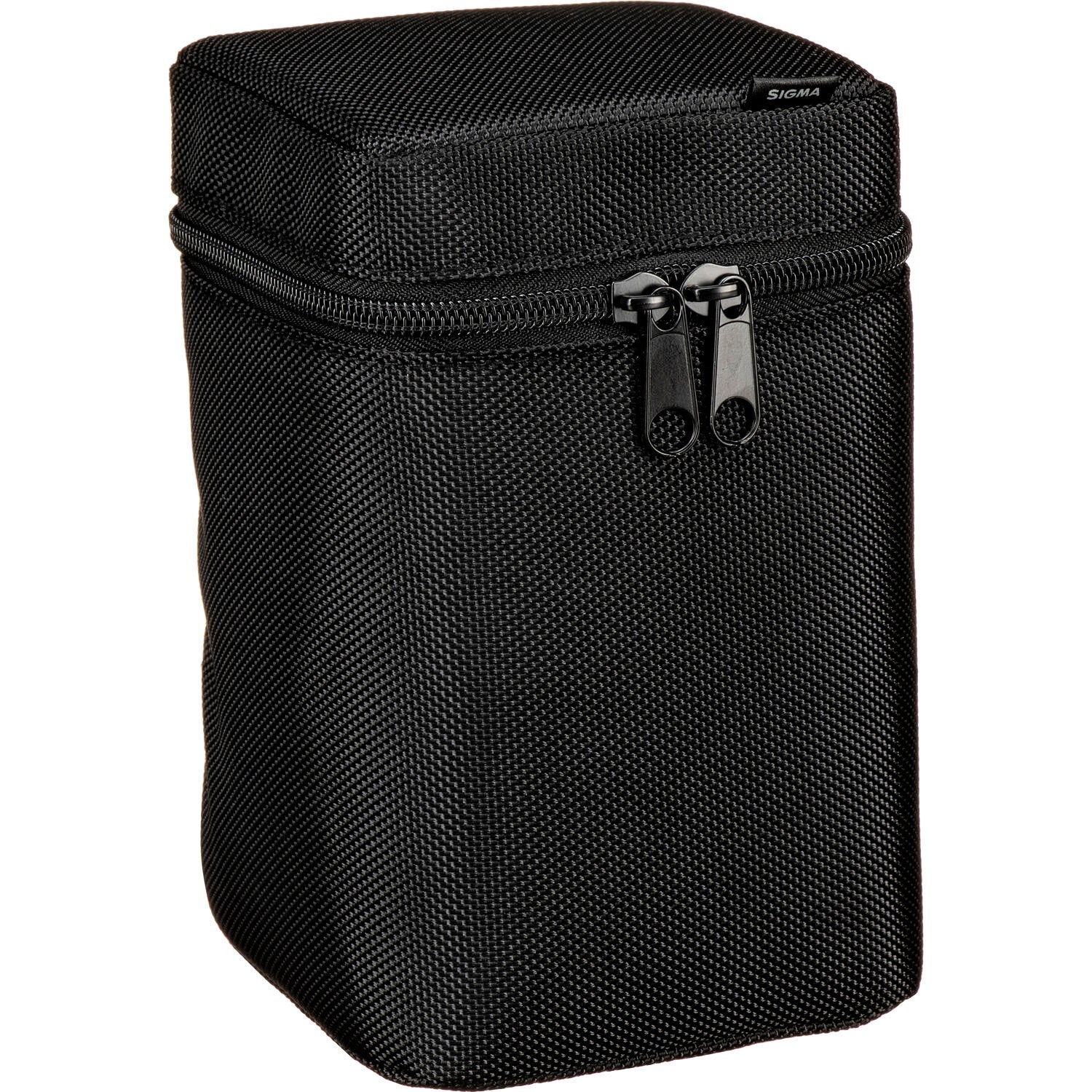
- Sigma Soft Lens Case for 150-600mm f/5-6.3 DG DN OS Sports Lens
- Sigma TS-121 Tripod Socket
- Sigma LCF-95 III 95mm Lens Cap
- Sigma LCR II Rear Lens Cap for Sony E
- Limited Warranty
Is the Sigma 150-600mm F5-6.3 DG DN OS Sports Lens compatible with Sony cameras?
Yes. The Sony E-Mount version is compatible with supported Sony Alpha full-frame and APS-C mirrorless cameras. The lens is also available in an L-Mount version for compatible Panasonic Lumix, Leica, and Sigma cameras. Make sure to select the correct mount for your camera.
Is the Sigma 150-600mm DG DN OS Sports Lens good for bird and wildlife photography?
Yes. Its 150–600mm focal range allows photographers to capture distant birds and wildlife without getting too close. The optical stabilization, autofocus system, and adjustable zoom controls make it particularly useful for photographing animals in natural environments.
Can you use the Sigma 150-600mm Sports Lens handheld?
Yes. The lens features built-in optical stabilization to help reduce camera shake during handheld shooting. With compatible updated firmware, it provides up to 6.5 stops of stabilization at 150mm and 5.5 stops at 600mm. However, its approximately 2.1kg weight may make a monopod or tripod more comfortable for extended sessions.
Does the Sigma 150-600mm F5-6.3 DG DN OS Sports Lens work with teleconverters?
Yes, but only the L-Mount version supports Sigma's TC-1411 1.4× and TC-2011 2× teleconverters. These extend the focal length to 210–840mm and 300–1200mm, respectively. The Sony E-Mount version does not support these Sigma teleconverters.
Is the Sigma 150-600mm DG DN OS Sports Lens weather-sealed?
The lens features dust- and splash-resistant construction for outdoor photography. Its front element also has a water- and oil-repellent coating that makes moisture and fingerprints easier to clean. However, the lens is not waterproof and should not be submerged or exposed to heavy water ingress.
Can the Sigma 150-600mm Sports Lens be used for close-up photography?
Yes. The lens has a minimum focusing distance of 58cm at 150mm and a maximum magnification ratio of 1:2.9 at approximately 180mm. This makes it useful for photographing flowers, insects, and small natural subjects, although it does not provide true 1:1 macro magnification.
What is the difference between the Sigma 150-600mm DG DN OS Sports and DG OS HSM Sports lenses?
The DG DN OS Sports version is designed specifically for mirrorless cameras, while the older DG OS HSM Sports version was developed for DSLR systems. The DG DN model features a different optical design, stepping motor autofocus, and a lighter body. It weighs approximately 2.1kg, making it more manageable than the older DSLR Sports version.
Is the Sigma 150-600mm F5-6.3 DG DN OS Sports Lens suitable for low-light photography?
The lens can be used in low-light conditions, but its variable f/5–6.3 maximum aperture gathers less light than faster telephoto lenses. Optical stabilization helps reduce camera shake, but it cannot freeze moving subjects. Photographers shooting wildlife at dusk or indoor sports may need higher ISO settings to maintain sufficiently fast shutter speeds.
| Feature | Sigma 150-600mm F5-6.3 DG DN OS Sports | Sony FE 200-600mm F5.6-6.3 G OSS | Tamron 150-500mm F5-6.7 Di III VC VXD | Sigma 100-400mm F5-6.3 DG DN OS Contemporary | Panasonic Lumix S 100-500mm F5-7.1 O.I.S. |
|---|---|---|---|---|---|
| Best For | Wildlife and sports photographers needing 600mm reach | Sony wildlife photographers prioritizing internal zoom | Photographers wanting a smaller 500mm telephoto zoom | Travel and outdoor photographers prioritizing portability | L-Mount wildlife photographers seeking native-system integration |
| Best Advantage | 600mm reach, Dual Action Zoom, and close-up capability | Internal zoom and 600mm reach | Compact 500mm zoom with fast linear-motor autofocus | Lightweight construction and 100mm starting focal length | 100-500mm range and L-Mount teleconverter support |
| Main Drawback | Heavy body and extending zoom barrel | 200mm minimum focal length and substantial size | Maximum focal length limited to 500mm | Shorter 400mm maximum focal length | f/7.1 maximum aperture at 500mm |
| Key Use Cases | Birding, wildlife, field sports, aviation | Birds in flight, wildlife, motorsports | Wildlife, outdoor sports, close-up nature | Travel wildlife, outdoor events, distant landscapes | Wildlife, nature, outdoor sports, travel |
| Portability / Usability | 2.1kg; adjustable zoom torque and rotating tripod collar | Approx. 2.12kg; constant-length internal zoom | Approx. 1.73kg (Sony E); extending zoom | Approx. 1.14kg (Sony E); compact extending zoom | Approx. 1.29kg; compact telephoto design |
| Performance | Stepping motor AF with optical stabilization | Direct Drive SSM autofocus with optical stabilization | VXD linear-motor autofocus with vibration compensation | Stepping motor AF with optical stabilization | Dual Phase Linear Motor AF with optical stabilization |
| Overall Value | Versatile 600mm option for Sony E and L-Mount systems | Specialized Sony option with internal zoom | Balanced reach and portability for Sony E users | Portable option for photographers who do not require 600mm | Lightweight native L-Mount option with broad zoom coverage |
| Lens Mount | Sony E, L-Mount | Sony E | Sony E, Fujifilm X, Nikon Z | Sony E, L-Mount | L-Mount |
| Sensor Coverage | Full-frame | Full-frame | Full-frame | Full-frame | Full-frame |
| Focal Length | 150-600mm | 200-600mm | 150-500mm | 100-400mm | 100-500mm |
| Maximum Aperture | f/5-6.3 | f/5.6-6.3 | f/5-6.7 | f/5-6.3 | f/5-7.1 |
| Optical Construction | 25 elements in 15 groups | 24 elements in 17 groups | 25 elements in 16 groups | 22 elements in 16 groups | 19 elements in 12 groups |
| Aperture Blades | 9 rounded | 11 rounded | 7 rounded | 9 rounded | 11 |
| Autofocus Motor | Stepping motor | Direct Drive SSM | VXD linear motor | Stepping motor | Dual Phase Linear Motor |
| Image Stabilization | Optical OS; up to 6.5 stops at 150mm and 5.5 stops at 600mm with updated firmware | Optical SteadyShot | Vibration Compensation (VC) | Optical Stabilizer (OS) | Optical Image Stabilizer (O.I.S.) |
| Minimum Focus Distance | 0.58m at 150mm; 2.8m at 600mm | 2.4m | 0.6m at 150mm; 1.8m at 500mm | 1.12m at 100mm; 1.6m at 400mm | 0.8m at 100mm |
| Maximum Magnification | 1:2.9 | 0.2x | 1:3.1 at 150mm | 1:4.1 at 400mm | 0.36x |
| Filter Diameter | 95mm | 95mm | 82mm | 67mm | 82mm |
| Weight | Approx. 2,100g | Approx. 2,115g | Approx. 1,725g (Sony E) | Approx. 1,140g (Sony E) | Approx. 1,285g |
| Zoom Mechanism | Extending; rotary and push-pull with adjustable torque | Internal zoom | Extending zoom | Extending zoom | Extending zoom |
| Teleconverter Support | 1.4x and 2x Sigma teleconverters (L-Mount only) | Sony 1.4x and 2x teleconverters | No manufacturer-supported teleconverter | No manufacturer-supported teleconverter | Panasonic 1.4x and 2x L-Mount teleconverters |
| Weather Resistance | Dust- and splash-resistant | Dust- and moisture-resistant | Moisture-resistant construction | Dust- and splash-resistant | Dust-, splash-, and freeze-resistant |
| Best Choice If... | You need 600mm reach, flexible zoom controls, and Sony E or L-Mount compatibility. | You use Sony E-Mount and prefer a constant-length internal zoom for tracking action. | You want 500mm reach with less weight than most 600mm zooms. | You prioritize portability and can work with a 400mm maximum focal length. | You use L-Mount and want a lighter 100-500mm zoom with teleconverter compatibility. |
Nuzira Featured Reviews
It is so nice to see a small family owned shop instead of these big box stores. I generally felt cared about when getting my blackmagic cinema camera. Love the quality of the images and how easy it is to use.
Read More
This small business has the best customer service HANDS DOWN!!
Lucas worked with me diligently to help me find a camera that would fit my needs and that would arrive in time for my trip. I take photos, but wanted a smaller, more compact camera to take with me when traveling. He even reached out to other camera experts to make sure he was giving me the best advice for the equipment that would accommodate my needs!
Lucas was patient with me and was in constant contact with the camera supplier to keep me updated on the status of my order and when the items would be ready for shipment. Once my order arrived to the store, it was in my hands in less than 2 days. I would give 10 stars to this business if I could!!
SHOP SMALL! :)
AMAZING SERVICE!
In short: I was able to receive the black colorway below retail and free next day shipping with the promos that they offered for being a new camera web-shop based from AZ.
Long story: Lucas who is prolly the only rep for the company cuz they're so small is the best dude ever. Since i ordered he responded on emails and updates quicker than some of my friends texting me back about where am at on the list as people just kept cancelling their order. I went from 9th place in line to 4th place in line for the silver. And he hit me up saying that they were still waiting on Fuji to send shipping updates and that no company knows what they get on their weekly fuji shipments other than from a 24 hour window of receiving shipping details.
He then noted that there were two black X100Vs available that were reserved to customers who ordered but have not confirmed. I said if they dont confirm please let me know and ill take that instead of the silver. The next day he hits me saying the customer said to cancel and he sent me an invoice. I ordered accessories for the camera on amazon right after and my package for the camera came before my amazon package. Lucas was super nice and transparent about everything. Dope experience from NUZIRA.
Lucas was so incredibly helpful!!! I’ve genuinely never had better customer service. They offered to stay late so I could get my order and were so patient with all my questions. I would give them 10 stars if I could.
Read More
NUZIRA MADE MY MONTH!
I was a little concerned when I first came across this small business but I am so so thankful I di! They have the NICESt staff and customer service. I have been on the waitlist for this camera for a few months now so when Lucas called saying they had it back in stock I was so freaking excited! Made my whole month. This camera absolutely lives up to the hype. I love how lightweight it is. I can pop it into any bag and head out the door. the images are crisp, high quality, and stunning. I use film sim and not film sim. The film simulations are nearly identical to real film. I have another fuji camera that does film sim but it can't even be compared to this one. I love my Fujifilm X100v so much! Amazing camera! Thanks you Nuzira!